Original ScanClick to zoom
Click to zoom
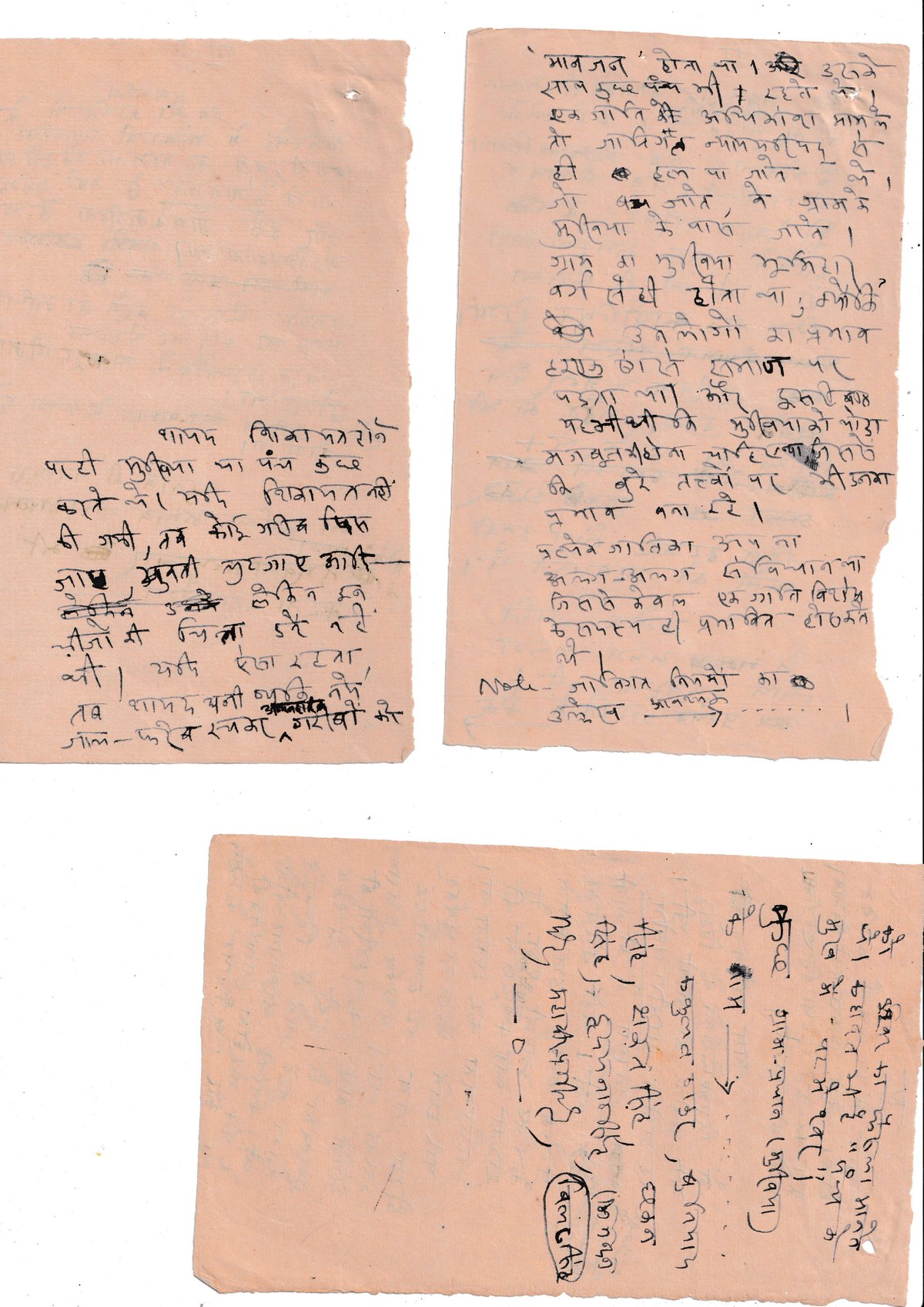
Transcription
शायद शिवाय रोने
पाटी मुखिया या पंच कुछ
करते थे। यदि शिकायत नहीं
की गयी, तब कोई गरीब किस
जाए सुनती लुट जाए आदि—
होने से उसके लेकिन इन
चीज़ों से चिन्ता डरे नहीं
थी। यदि ऐसा रहता,
तब शायद पनी असली
जाल- फरेब करके गरीबों को
Perhaps except for crying
The village head or panchayat did something
If no complaint was made
Then some poor person would go
Hear, get robbed, etc.—
Because of these things, but
There was no worry or fear from these things
If it remained like this,
Then perhaps one's real
Net- by doing fraud to the poor
मात जन' होना या। और उसके
साल कुछ भी रहते—
एक जाति से अधिकांश
तो जातिगत न्याय से
हो जाते। पर(?) जाति
अधिकतर वे ग्राम के
मुखिया के पास जाते।
ग्राम वा मुखिया भूमिस्वामी
होता था, जो उच्च
वर्ग से। उन लोगों का प्रभाव
हर तरह से समाज पर
पड़ता था और इसलिए
'Common man' would become. And in those
Years anything would remain—
From one caste the majority
Would be settled through caste justice
But(?) caste
Mostly they would go to the village
Head.
The village head was a landowner
Who was from the upper
Class. The influence of those people
Fell on society in every way
And therefore
यह भी थी कि भुखिया को मोटा
मजबूत चाहिए का जिससे
बुरे तत्वों पर भी उनका
प्रभाव बना रहे।
प्रत्येक जातिका अपना
अलग-अलग से विधान का
जिससे केवल एक विशेष
जाति के सदस्य होते
थे।
Note - जातिगत नियमों का
उल्लेख आवश्यक.....
This was also that the head needed to be strong
and powerful so that
Their influence would remain even on bad elements.
Each caste had its own
Separate constitution
In which only members of a particular
Caste would be
Included.
Note - Mention of caste rules
is necessary.....
कहावत भी है
'पंच परमेश्वर'
पंच का फैसला मानते
मुख में
कुछ ग्राम-प्रधान के
नाम
> मो. सिंह
> राजा सिंह
> शरत सिंह, ठाकुर
> ककुलत सिंह(?)
> रामनुज(?)
> सिंह
> (नाम?)
There is also a saying
'Panch Parmeshwar' (The five are God)
They accept the decision of the panchayat
In the mouth
Some names of village heads
> Mo. Singh
> Raja Singh
> Sharat Singh, Thakur
> Kakulat Singh(?)
> Ramanuj(?)
> Singh
> (Name?)
पाटी मुखिया या पंच कुछ
करते थे। यदि शिकायत नहीं
की गयी, तब कोई गरीब किस
जाए सुनती लुट जाए आदि—
होने से उसके लेकिन इन
चीज़ों से चिन्ता डरे नहीं
थी। यदि ऐसा रहता,
तब शायद पनी असली
जाल- फरेब करके गरीबों को
Perhaps except for crying
The village head or panchayat did something
If no complaint was made
Then some poor person would go
Hear, get robbed, etc.—
Because of these things, but
There was no worry or fear from these things
If it remained like this,
Then perhaps one's real
Net- by doing fraud to the poor
मात जन' होना या। और उसके
साल कुछ भी रहते—
एक जाति से अधिकांश
तो जातिगत न्याय से
हो जाते। पर(?) जाति
अधिकतर वे ग्राम के
मुखिया के पास जाते।
ग्राम वा मुखिया भूमिस्वामी
होता था, जो उच्च
वर्ग से। उन लोगों का प्रभाव
हर तरह से समाज पर
पड़ता था और इसलिए
'Common man' would become. And in those
Years anything would remain—
From one caste the majority
Would be settled through caste justice
But(?) caste
Mostly they would go to the village
Head.
The village head was a landowner
Who was from the upper
Class. The influence of those people
Fell on society in every way
And therefore
यह भी थी कि भुखिया को मोटा
मजबूत चाहिए का जिससे
बुरे तत्वों पर भी उनका
प्रभाव बना रहे।
प्रत्येक जातिका अपना
अलग-अलग से विधान का
जिससे केवल एक विशेष
जाति के सदस्य होते
थे।
Note - जातिगत नियमों का
उल्लेख आवश्यक.....
This was also that the head needed to be strong
and powerful so that
Their influence would remain even on bad elements.
Each caste had its own
Separate constitution
In which only members of a particular
Caste would be
Included.
Note - Mention of caste rules
is necessary.....
कहावत भी है
'पंच परमेश्वर'
पंच का फैसला मानते
मुख में
कुछ ग्राम-प्रधान के
नाम
> मो. सिंह
> राजा सिंह
> शरत सिंह, ठाकुर
> ककुलत सिंह(?)
> रामनुज(?)
> सिंह
> (नाम?)
There is also a saying
'Panch Parmeshwar' (The five are God)
They accept the decision of the panchayat
In the mouth
Some names of village heads
> Mo. Singh
> Raja Singh
> Sharat Singh, Thakur
> Kakulat Singh(?)
> Ramanuj(?)
> Singh
> (Name?)
Words: 193Low confidence: 37Avg confidence: 75.1%