Original ScanClick to zoom
Click to zoom
Transcription
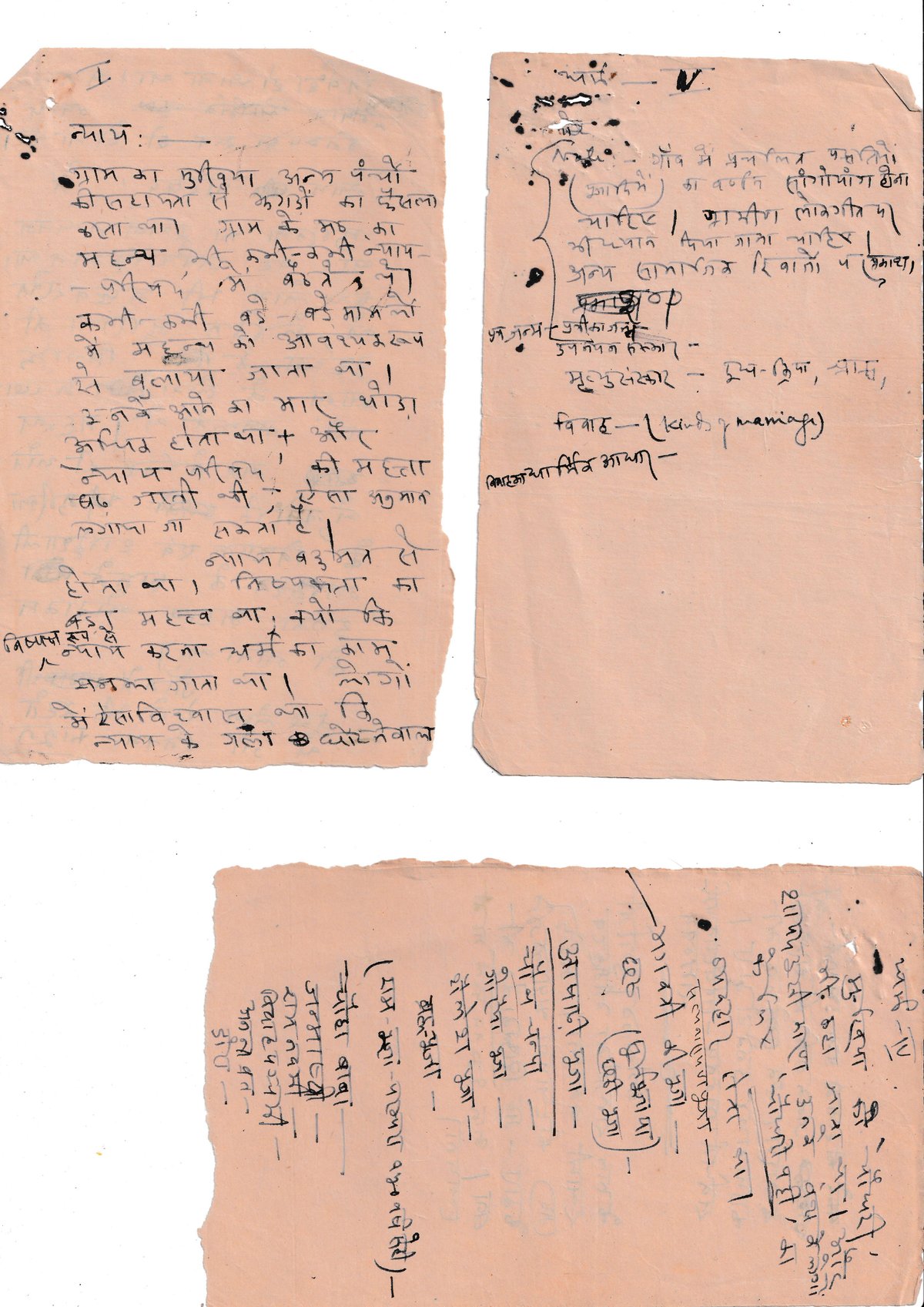
न्याय:
ग्राम का मुखिया मुकद्दमों को तय करता था। पूरे गाँव का न्यायालय था जिसमें प्रत्येक जाति का प्रतिनिधि होता था। ग्राम के मुख्य का महत्व भी कभी-कभी न्याय-परिषद में दिखाई देता है।
Justice: The village headman used to settle disputes. The entire village had a court in which there was a representative of each caste. The importance of the village chief was also sometimes visible in the justice council.
कभी-कभी बड़े बड़े मामलों में मठ का महन्त को आवश्यकरूप से बुलाया जाता था।
Sometimes in big cases, the head priest of the monastery was necessarily called.
उनके आने का भार थोड़ा अधिक होता था और न्याय परिषद की महत्ता बढ़ जाती थी, ऐसा अनुमान लगाया जा सकता है।
The burden of their coming was slightly more and the importance of the justice council would increase, such an assumption can be made.
निष्पक्षता बहुत महत्व की थी, क्योंकि निष्पक्ष न्याय करना धर्म का काम समझा जाता था। लोगों में ऐसा विश्वास था कि झूठा गला घोंटनेवाला
Impartiality was very important, because delivering impartial justice was considered a religious duty. People had such a belief that the liar would be strangled
[Page 2]
गाँव में प्रचलित रीति-रिवाजों तथा प्रथाओं का वर्णन सांगोपांग होना चाहिए। ग्रामीण लोकगीत का ध्यान दिया जाए अन्य सामाजिक रिवाजों में (प्रकाश)
The description of customs and practices prevalent in the village should be comprehensive. Attention should be paid to rural folk songs among other social customs (Prakash)
पुत्र जन्म पुत्री का जन्म
उपनयन संस्कार
मृत्युसंस्कार - इति-क्रिया, श्राद्ध,
विवाह - (लेख, naming)
पर्वों का धार्मिक आधार
Birth of son, birth of daughter
Sacred thread ceremony
Death rituals - funeral rites, shraddh
Marriage - (writing, naming)
Religious basis of festivals
[Page 3]
गाँव के मुखिया को चौधरी कहा जाता था। और वे लोगों के लिए 'चौधरी पट्टी' का प्रबन्ध करते थे।
The village headman was called chaudhary. And they managed the 'chaudhary patti' for the people.
ग्राम का मुखिया मुकद्दमों को तय करता था। पूरे गाँव का न्यायालय था जिसमें प्रत्येक जाति का प्रतिनिधि होता था। ग्राम के मुख्य का महत्व भी कभी-कभी न्याय-परिषद में दिखाई देता है।
Justice: The village headman used to settle disputes. The entire village had a court in which there was a representative of each caste. The importance of the village chief was also sometimes visible in the justice council.
कभी-कभी बड़े बड़े मामलों में मठ का महन्त को आवश्यकरूप से बुलाया जाता था।
Sometimes in big cases, the head priest of the monastery was necessarily called.
उनके आने का भार थोड़ा अधिक होता था और न्याय परिषद की महत्ता बढ़ जाती थी, ऐसा अनुमान लगाया जा सकता है।
The burden of their coming was slightly more and the importance of the justice council would increase, such an assumption can be made.
निष्पक्षता बहुत महत्व की थी, क्योंकि निष्पक्ष न्याय करना धर्म का काम समझा जाता था। लोगों में ऐसा विश्वास था कि झूठा गला घोंटनेवाला
Impartiality was very important, because delivering impartial justice was considered a religious duty. People had such a belief that the liar would be strangled
[Page 2]
गाँव में प्रचलित रीति-रिवाजों तथा प्रथाओं का वर्णन सांगोपांग होना चाहिए। ग्रामीण लोकगीत का ध्यान दिया जाए अन्य सामाजिक रिवाजों में (प्रकाश)
The description of customs and practices prevalent in the village should be comprehensive. Attention should be paid to rural folk songs among other social customs (Prakash)
पुत्र जन्म पुत्री का जन्म
उपनयन संस्कार
मृत्युसंस्कार - इति-क्रिया, श्राद्ध,
विवाह - (लेख, naming)
पर्वों का धार्मिक आधार
Birth of son, birth of daughter
Sacred thread ceremony
Death rituals - funeral rites, shraddh
Marriage - (writing, naming)
Religious basis of festivals
[Page 3]
गाँव के मुखिया को चौधरी कहा जाता था। और वे लोगों के लिए 'चौधरी पट्टी' का प्रबन्ध करते थे।
The village headman was called chaudhary. And they managed the 'chaudhary patti' for the people.
Words: 178Low confidence: 29Avg confidence: 76.0%