Original ScanClick to zoom
Click to zoom
Transcription
3. और प्रश्न (Hypothesis to be tested, if any or questions to be asked)
प्राचीन काल के इतिहास के विषय में
ठीक से जानकारी नहीं हो सकी है। यह निश्चित ही
शब्दों के अर्थ-विश्लेषण के माध्यम से पूरा किया
जाएगा। इन शब्दों में भरपूर भौतिक अर्थ का समावेश
है। शब्द में निहित अर्थ इन दोनों का
प्रारम्भ सामाजिक समझौते तथा सहयोग के कारण हुआ।
इसलिए बदलते हुए समय में भी शब्दों के अर्थों
में भी परिवर्तन होता रहता है।
शब्दों ने भी नए-नए अर्थों को अपनी(?) आवश्यकता के
अनुसार अंगीकार किया है। ऐसा लगता है कि मानवीय
नियोजन की तरह शब्द और अर्थ के बीच भी एक रस्सी की तरह सम्बन्ध
है। सम्भवतः इसीलिए कुछ विचारकों ने शब्दों में निहित
इन सारी क्षमताओं को यदि अनावृत करने का प्रयत्न
किया जाए तो सम्भव है कि वैदिक-कालीन सामाजिक-आर्थिक तथा सांस्कृतिक
अध्ययन की जो दृष्टि अपनाई जाती रही है उसमें भी किसी हद तक मौलिक
परिवर्तन हो सके। यह अब निर्विवाद है कि शब्द समाज की सामाजिक-आर्थिक
तथा सांस्कृतिक आवश्यकताओं से प्रभावित(?) होने के कारण ही अर्थवान होते हैं।
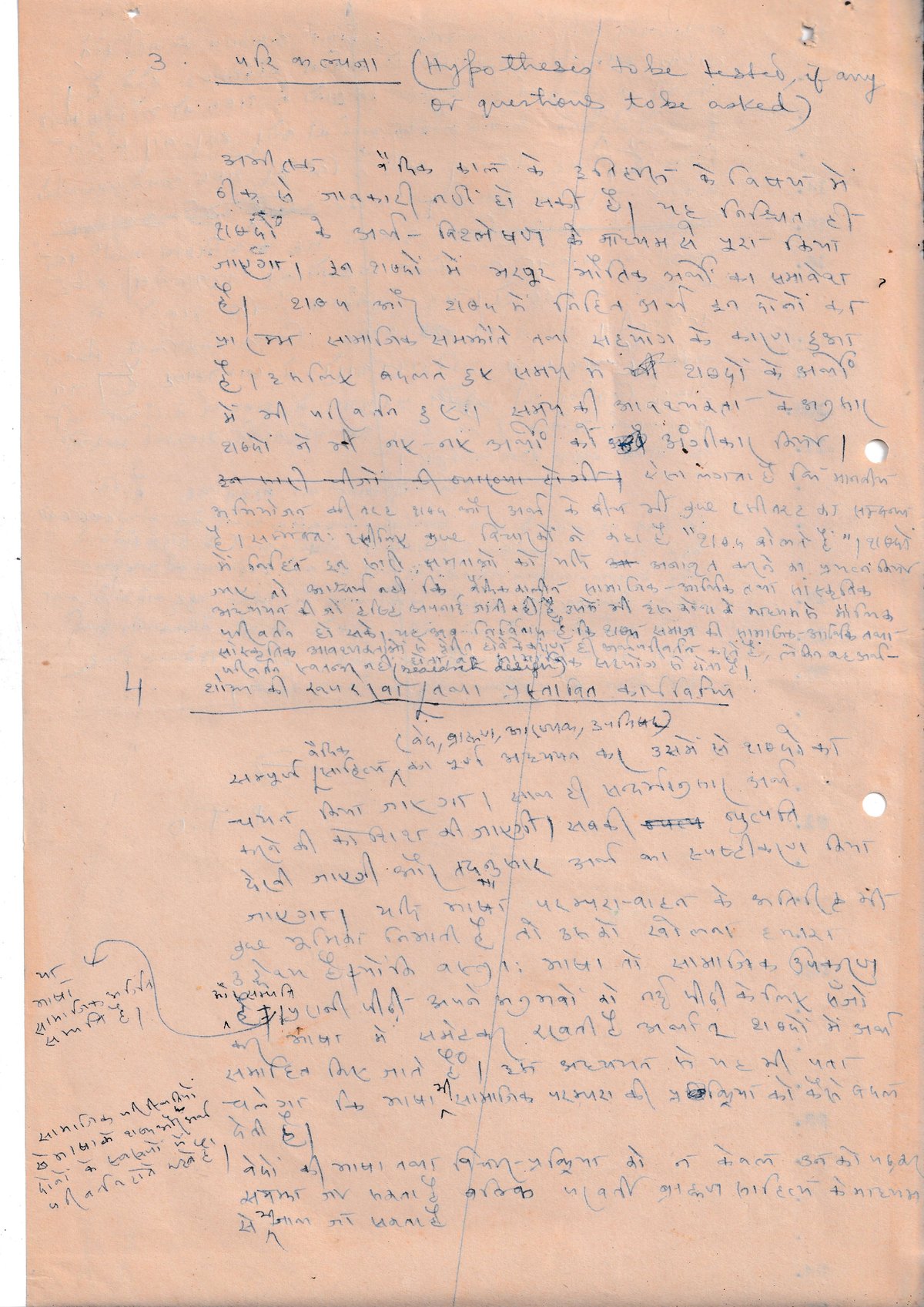
Proper information about the history of ancient times has not been obtained. This will certainly be completed through the semantic analysis of words. These words contain abundant material meaning. The meaning inherent in words - the beginning of both occurred due to social agreement and cooperation. Therefore, even in changing times, the meanings of words keep changing. Words have also adopted new meanings according to their(?) needs. It seems that like human planning, there is a rope-like relationship between words and meanings. Perhaps this is why some thinkers have suggested that if an attempt is made to unveil all these capabilities inherent in words, it is possible that the approach to Vedic-period socio-economic and cultural studies that has been adopted may also undergo fundamental change to some extent. It is now undisputed that words become meaningful only because they are influenced(?) by the socio-economic and cultural needs of society.
4. कार्य की रूपरेखा तथा प्रस्तावित कार्यविधि
Work outline and proposed methodology
(अ) वैदिक सम्पूर्ण साहित्य (वेद, ब्राह्मण, आरण्यक, उपनिषद)
का अध्ययन किया जाएगा।
(a) The entire Vedic literature (Veda, Brahmana, Aranyaka, Upanishad) will be studied.
(ब) इनमें से(?) उन शब्दों का चयन किया जाएगा
जिनकी(?) भाषा व्युत्पत्ति
अर्थ और तद्नुसार सन्दर्भानुसार अर्थ
देखी जाएगी।
(b) From these(?), those words will be selected whose(?) linguistic etymology, meaning and accordingly contextual meaning will be examined.
यदि भाषा केवल सम्प्रेषण का(?) अतिरिक्त
कुछ भूमिका निभाती है तो उसके द्वारा सामाजिक
परम्परा की प्रक्रिया को भी समझा जा सकता है। क्योंकि
वस्तुतः भाषा एक सामाजिक उपकरण है जिसमें हर एक पीढ़ी अपने अनुभवों
को नई पीढ़ी के लिए संजो कर समेट रखती है अर्थात्
शब्दों में अर्थ समाहित किए जाते हैं।
If language plays some role beyond(?) communication, then through it the process of social tradition can also be understood. Because language is actually a social tool in which every generation preserves and compiles its experiences for the new generation, that is, meanings are incorporated in words.
इस अध्ययन के द्वारा यह भी पता चलेगा कि भाषा
सामाजिक परिवर्तन की प्रक्रिया को कैसे प्रभावित करती है।
Through this study, it will also be found out how language influences the process of social change.
यह भी समझा जा सकता है कि केवल सम्पूर्ण वैदिक
साहित्य के माध्यम से ही नहीं बल्कि विभिन्न काल के साहित्य
के माध्यम से भी।
It can also be understood that not only through the entire Vedic literature but also through the literature of different periods.
प्राचीन काल के इतिहास के विषय में
ठीक से जानकारी नहीं हो सकी है। यह निश्चित ही
शब्दों के अर्थ-विश्लेषण के माध्यम से पूरा किया
जाएगा। इन शब्दों में भरपूर भौतिक अर्थ का समावेश
है। शब्द में निहित अर्थ इन दोनों का
प्रारम्भ सामाजिक समझौते तथा सहयोग के कारण हुआ।
इसलिए बदलते हुए समय में भी शब्दों के अर्थों
में भी परिवर्तन होता रहता है।
शब्दों ने भी नए-नए अर्थों को अपनी(?) आवश्यकता के
अनुसार अंगीकार किया है। ऐसा लगता है कि मानवीय
नियोजन की तरह शब्द और अर्थ के बीच भी एक रस्सी की तरह सम्बन्ध
है। सम्भवतः इसीलिए कुछ विचारकों ने शब्दों में निहित
इन सारी क्षमताओं को यदि अनावृत करने का प्रयत्न
किया जाए तो सम्भव है कि वैदिक-कालीन सामाजिक-आर्थिक तथा सांस्कृतिक
अध्ययन की जो दृष्टि अपनाई जाती रही है उसमें भी किसी हद तक मौलिक
परिवर्तन हो सके। यह अब निर्विवाद है कि शब्द समाज की सामाजिक-आर्थिक
तथा सांस्कृतिक आवश्यकताओं से प्रभावित(?) होने के कारण ही अर्थवान होते हैं।
Proper information about the history of ancient times has not been obtained. This will certainly be completed through the semantic analysis of words. These words contain abundant material meaning. The meaning inherent in words - the beginning of both occurred due to social agreement and cooperation. Therefore, even in changing times, the meanings of words keep changing. Words have also adopted new meanings according to their(?) needs. It seems that like human planning, there is a rope-like relationship between words and meanings. Perhaps this is why some thinkers have suggested that if an attempt is made to unveil all these capabilities inherent in words, it is possible that the approach to Vedic-period socio-economic and cultural studies that has been adopted may also undergo fundamental change to some extent. It is now undisputed that words become meaningful only because they are influenced(?) by the socio-economic and cultural needs of society.
4. कार्य की रूपरेखा तथा प्रस्तावित कार्यविधि
Work outline and proposed methodology
(अ) वैदिक सम्पूर्ण साहित्य (वेद, ब्राह्मण, आरण्यक, उपनिषद)
का अध्ययन किया जाएगा।
(a) The entire Vedic literature (Veda, Brahmana, Aranyaka, Upanishad) will be studied.
(ब) इनमें से(?) उन शब्दों का चयन किया जाएगा
जिनकी(?) भाषा व्युत्पत्ति
अर्थ और तद्नुसार सन्दर्भानुसार अर्थ
देखी जाएगी।
(b) From these(?), those words will be selected whose(?) linguistic etymology, meaning and accordingly contextual meaning will be examined.
यदि भाषा केवल सम्प्रेषण का(?) अतिरिक्त
कुछ भूमिका निभाती है तो उसके द्वारा सामाजिक
परम्परा की प्रक्रिया को भी समझा जा सकता है। क्योंकि
वस्तुतः भाषा एक सामाजिक उपकरण है जिसमें हर एक पीढ़ी अपने अनुभवों
को नई पीढ़ी के लिए संजो कर समेट रखती है अर्थात्
शब्दों में अर्थ समाहित किए जाते हैं।
If language plays some role beyond(?) communication, then through it the process of social tradition can also be understood. Because language is actually a social tool in which every generation preserves and compiles its experiences for the new generation, that is, meanings are incorporated in words.
इस अध्ययन के द्वारा यह भी पता चलेगा कि भाषा
सामाजिक परिवर्तन की प्रक्रिया को कैसे प्रभावित करती है।
Through this study, it will also be found out how language influences the process of social change.
यह भी समझा जा सकता है कि केवल सम्पूर्ण वैदिक
साहित्य के माध्यम से ही नहीं बल्कि विभिन्न काल के साहित्य
के माध्यम से भी।
It can also be understood that not only through the entire Vedic literature but also through the literature of different periods.
Words: 403Low confidence: 71Avg confidence: 75.5%