Original ScanClick to zoom
Click to zoom
Transcription
8. उस परियोजना का महत्व
(Significance of the project)
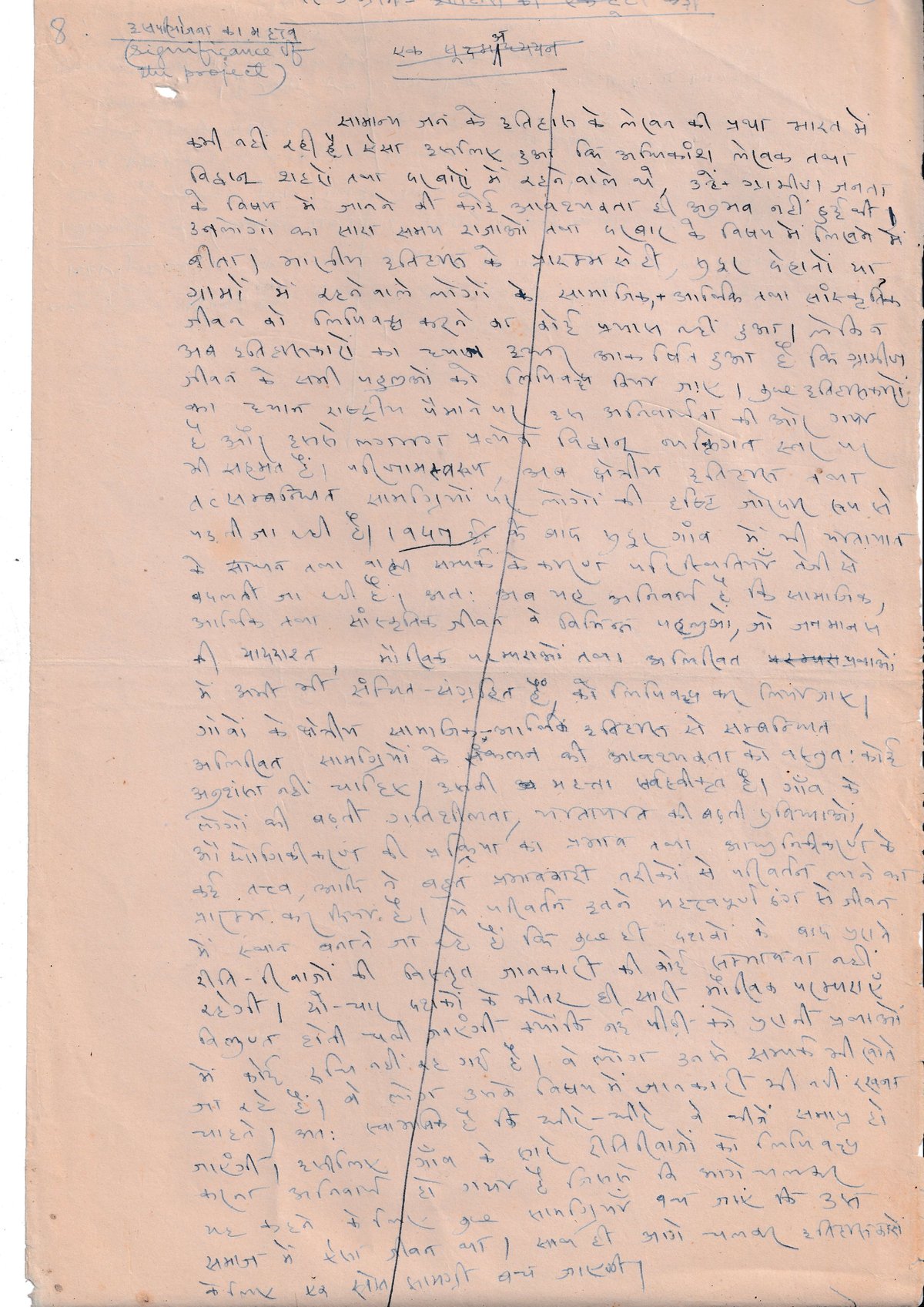
सामान्य जन के इतिहास के लेखन की प्रथा भारत में कभी नहीं रही है। ऐसा इसलिए हुआ कि अधिकांश लेखक तथा विद्वान् शहरों तथा दरबारों में रहने वाले थे, उन्हें ग्रामीण जनता के विषय में जानने की कोई आवश्यकता ही अनुभव नहीं हुई थी। उनलोगों का सारा समय राजाओं तथा दरबार के विषय में लिखने में बीता। भारतीय इतिहास के प्रारम्भ से ही गांवों या ग्रामों में रहने वाले लोगों के जीवन को लिपिबद्ध करने का कोई गम्भीर प्रयास नहीं हुआ। लेकिन अब इतिहासकारों का ध्यान इस ओर आकर्षित हुआ है कि ग्रामीण जीवन के सभी पहलुओं को लिपिबद्ध किया जाए। कुछ इतिहासकार इस ओर राष्ट्रीय पैमाने पर इस अनिवार्यता की ओर गम्भीर हैं और उससे तत्सम्बन्धित सामग्रियों पर प्रत्येक विद्वान् व्यक्तिगत स्तर पर लोगों की दृष्टि पड़ती जा रही है।
1949 से के बाद गांव में भी यातायात के साधन तथा सम्पर्क के कारण परिस्थितियां तेजी से बदलती जा रही हैं। अब यह अनिवार्य है कि सामाजिक, आर्थिक तथा सांस्कृतिक जीवन के विभिन्न पहलुओं, जो जनमानस की मौखिक अलिखित स्मृति प्रणालियों में अभी भी संचित-संग्रहित हैं, को लिपिबद्ध कर लिया जाए।
गांवों के क्षेत्रीय सामाजिक इतिहास से सम्बन्धित अलिखित सामग्रियों के संकलन की आवश्यकता को वस्तुतः कोई अनुशंसा नहीं चाहिए। उसकी महत्ता सर्वस्वीकृत है। गांव के लोगों की बढ़ती गतिशीलता, यातायात की बढ़ती सुविधाओं, औद्योगीकरण की प्रक्रिया का प्रारम्भ तथा आधुनिकीकरण के कई तत्व आदि ने बहुत प्रभावकारी तरीकों से परिवर्तन लाने का काम किया है। ये परिवर्तन इतने महत्वपूर्ण ढंग से जीवन में स्थान बनाने जा रहे हैं कि दो-चार दशकों के भीतर ही पुराने रीति-रिवाजों की विस्तृत जानकारी की कोई सम्भावना नहीं रहेगी। दो-चार दशकों के भीतर ही सारी मौलिक परम्पराएं विलुप्त होती चली जाएंगी क्योंकि नई पीढ़ी को पुरानी परम्पराओं में कोई रुचि नहीं है। वे लोग उनसे सम्पर्क भी खोते जा रहे हैं। वे लोग उनके विषय में जानकारी भी नहीं रखना चाहते। स्वाभाविक है कि धीरे-धीरे ये सब समान हो जाएंगी। इसलिए अनिवार्य हो गया है कि गांव के समाज के सारे रीति-रिवाजों को लिपिबद्ध किया जाए जिससे कि आगे चलकर यह पता चल सके कि पुराने समाज में कैसा जीवन था। साथ ही आगे चलकर इतिहासकारों के लिए बहुमूल्य स्रोत सामग्री बच जाएगी।
The practice of writing the history of common people has never existed in India. This happened because most writers and scholars lived in cities and courts, they never felt any need to know about rural people. All their time was spent writing about kings and courts. From the beginning of Indian history, no serious attempt was made to document the lives of people living in villages. But now historians' attention has been drawn to document all aspects of rural life. Some historians are serious about this necessity at the national level and individual scholars are increasingly focusing on related materials.
Since 1949, due to means of transport and communication, circumstances in villages are also changing rapidly. It is now essential that various aspects of social, economic and cultural life, which are still stored in people's oral unwritten memory systems, be documented.
The need for collection of unwritten materials related to regional social history of villages actually needs no recommendation. Its importance is universally accepted. The increasing mobility of village people, growing transport facilities, the beginning of the process of industrialization and several elements of modernization have brought about changes in very effective ways. These changes are going to make such an important place in life that within two to four decades there will be no possibility of detailed knowledge of old customs. Within two to four decades all the basic traditions will disappear because the new generation has no interest in old traditions. They are losing contact with them. They don't even want to keep information about them. Naturally, gradually all these will become equal. Therefore it has become necessary to document all the customs of village society so that in future it can be known what life was like in the old society. At the same time, valuable source material will be saved for historians in the future.
(Significance of the project)
सामान्य जन के इतिहास के लेखन की प्रथा भारत में कभी नहीं रही है। ऐसा इसलिए हुआ कि अधिकांश लेखक तथा विद्वान् शहरों तथा दरबारों में रहने वाले थे, उन्हें ग्रामीण जनता के विषय में जानने की कोई आवश्यकता ही अनुभव नहीं हुई थी। उनलोगों का सारा समय राजाओं तथा दरबार के विषय में लिखने में बीता। भारतीय इतिहास के प्रारम्भ से ही गांवों या ग्रामों में रहने वाले लोगों के जीवन को लिपिबद्ध करने का कोई गम्भीर प्रयास नहीं हुआ। लेकिन अब इतिहासकारों का ध्यान इस ओर आकर्षित हुआ है कि ग्रामीण जीवन के सभी पहलुओं को लिपिबद्ध किया जाए। कुछ इतिहासकार इस ओर राष्ट्रीय पैमाने पर इस अनिवार्यता की ओर गम्भीर हैं और उससे तत्सम्बन्धित सामग्रियों पर प्रत्येक विद्वान् व्यक्तिगत स्तर पर लोगों की दृष्टि पड़ती जा रही है।
1949 से के बाद गांव में भी यातायात के साधन तथा सम्पर्क के कारण परिस्थितियां तेजी से बदलती जा रही हैं। अब यह अनिवार्य है कि सामाजिक, आर्थिक तथा सांस्कृतिक जीवन के विभिन्न पहलुओं, जो जनमानस की मौखिक अलिखित स्मृति प्रणालियों में अभी भी संचित-संग्रहित हैं, को लिपिबद्ध कर लिया जाए।
गांवों के क्षेत्रीय सामाजिक इतिहास से सम्बन्धित अलिखित सामग्रियों के संकलन की आवश्यकता को वस्तुतः कोई अनुशंसा नहीं चाहिए। उसकी महत्ता सर्वस्वीकृत है। गांव के लोगों की बढ़ती गतिशीलता, यातायात की बढ़ती सुविधाओं, औद्योगीकरण की प्रक्रिया का प्रारम्भ तथा आधुनिकीकरण के कई तत्व आदि ने बहुत प्रभावकारी तरीकों से परिवर्तन लाने का काम किया है। ये परिवर्तन इतने महत्वपूर्ण ढंग से जीवन में स्थान बनाने जा रहे हैं कि दो-चार दशकों के भीतर ही पुराने रीति-रिवाजों की विस्तृत जानकारी की कोई सम्भावना नहीं रहेगी। दो-चार दशकों के भीतर ही सारी मौलिक परम्पराएं विलुप्त होती चली जाएंगी क्योंकि नई पीढ़ी को पुरानी परम्पराओं में कोई रुचि नहीं है। वे लोग उनसे सम्पर्क भी खोते जा रहे हैं। वे लोग उनके विषय में जानकारी भी नहीं रखना चाहते। स्वाभाविक है कि धीरे-धीरे ये सब समान हो जाएंगी। इसलिए अनिवार्य हो गया है कि गांव के समाज के सारे रीति-रिवाजों को लिपिबद्ध किया जाए जिससे कि आगे चलकर यह पता चल सके कि पुराने समाज में कैसा जीवन था। साथ ही आगे चलकर इतिहासकारों के लिए बहुमूल्य स्रोत सामग्री बच जाएगी।
The practice of writing the history of common people has never existed in India. This happened because most writers and scholars lived in cities and courts, they never felt any need to know about rural people. All their time was spent writing about kings and courts. From the beginning of Indian history, no serious attempt was made to document the lives of people living in villages. But now historians' attention has been drawn to document all aspects of rural life. Some historians are serious about this necessity at the national level and individual scholars are increasingly focusing on related materials.
Since 1949, due to means of transport and communication, circumstances in villages are also changing rapidly. It is now essential that various aspects of social, economic and cultural life, which are still stored in people's oral unwritten memory systems, be documented.
The need for collection of unwritten materials related to regional social history of villages actually needs no recommendation. Its importance is universally accepted. The increasing mobility of village people, growing transport facilities, the beginning of the process of industrialization and several elements of modernization have brought about changes in very effective ways. These changes are going to make such an important place in life that within two to four decades there will be no possibility of detailed knowledge of old customs. Within two to four decades all the basic traditions will disappear because the new generation has no interest in old traditions. They are losing contact with them. They don't even want to keep information about them. Naturally, gradually all these will become equal. Therefore it has become necessary to document all the customs of village society so that in future it can be known what life was like in the old society. At the same time, valuable source material will be saved for historians in the future.
Words: 434Low confidence: 47Avg confidence: 81.0%