Original ScanClick to zoom
Click to zoom
Transcription
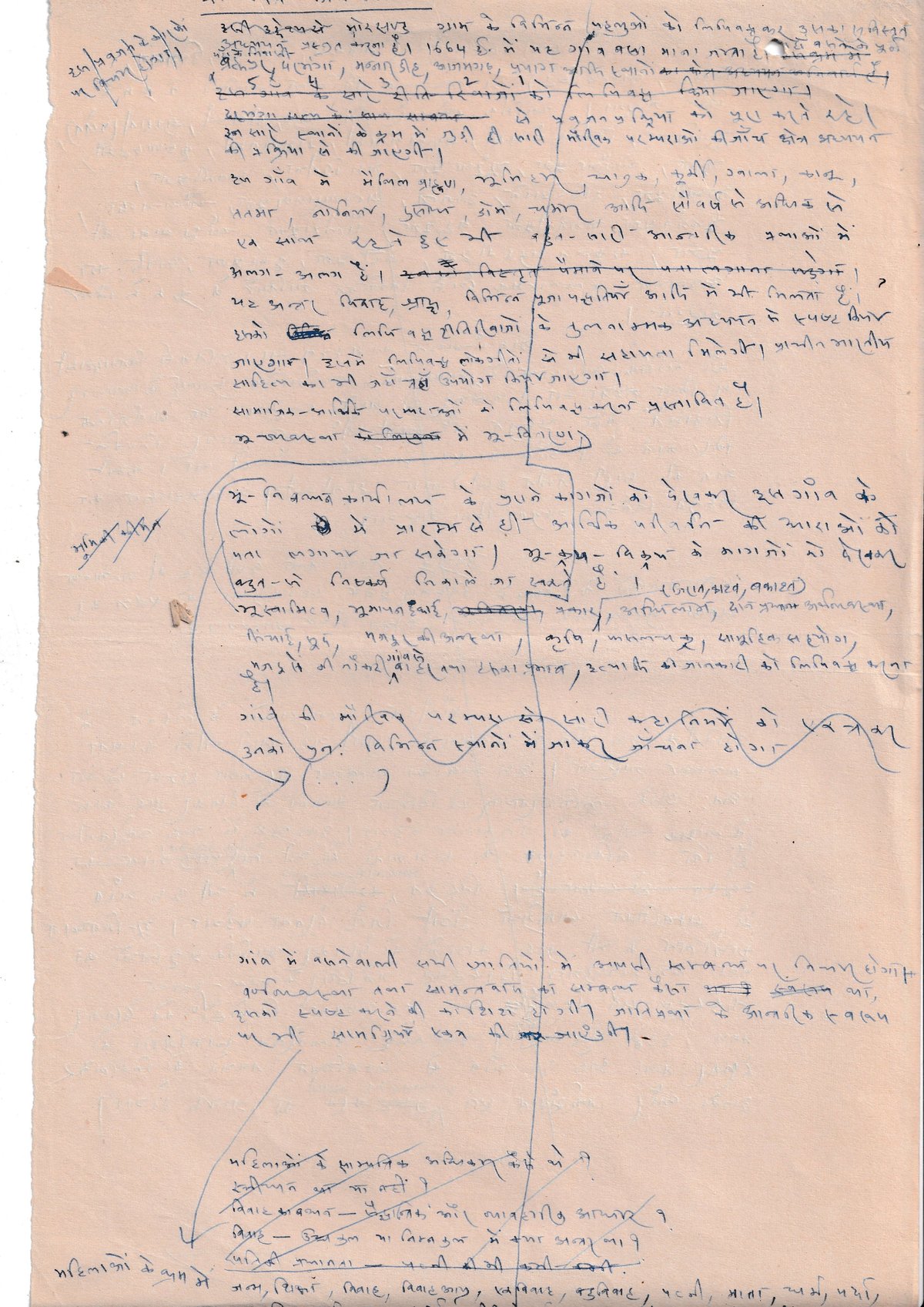
ग्राम के विभिन्न पहलुओं को लिपिबद्ध कर उसका तुलनात्मक अध्ययन प्रस्तुत करना है। वेदों में 1664 ई. में यह गांव बसा था व यह सभी उद्देश्य से उसकी इतिहास, परम्परा, रीति रिवाज और अर्थव्यवस्था को लिपिबद्ध करना है। मन्ना डीह, आजमगढ़, प्रयाग आदि स्थानों का क्षेत्र माना जाता है जिसमें यहाँ की सभी मौखिक परम्पराओं की जाँच क्षेत्र अध्ययन की प्रक्रिया से की जाएगी।
इस गाँव में विभिन्न जातियाँ निवास करती हैं, जैसे ब्राह्मण, भूमिहार, राजपूत, यादव, कुर्मी, काछी, कानू, अहीर आदि। यहाँ नोकिया, दुसाध, डोम, चमार आदि सवर्ण से अधिक संख्या में हैं। इनमें विस्तृत पैमाने पर सांस्कृतिक विविधताएं देखने को मिलती हैं। यह अन्तर विवाह, आचार, विभिन्न पूजा पद्धतियाँ आदि में भी स्पष्ट रूप से मिलता है।
इसको लिपिबद्ध करने के लिए तुलनात्मक अध्ययन किया जाएगा। इसमें लिपिबद्ध लोकगीतों से भी सहायता मिलेगी। प्राचीन भारतीय साहित्य का भी जहाँ जहाँ उपयोग किया जाएगा।
सामाजिक-आर्थिक परम्पराओं को लिपिबद्ध करना प्रस्तावित है।
भू-व्यवस्था को लिखने में भू-विज्ञान काली के पुराने कागजों को देखकर इस गांव के प्रारम्भ से ही आर्थिक परिस्थिति की जानकारी प्राप्त की जा सकेगी। भूस्वामित्व, भूमापन ईकाई, सिंचाई, मजदूर की अवस्था आदि पर प्रकाश डाला जाएगा।
भू-क्रय-विक्रय के कागजों को देखकर निष्कर्ष निकाले जा सकते हैं। (जमीन, खाता, बकारत) कृषि, फसल, सामूहिक सहयोग, मजदूर की नौकरी में है या नहीं, प्रभात, इत्यादि की जानकारी को लिपिबद्ध करना है।
गांव की मौखिक परम्परा से सारी महिलाओं के काम में उनको विभिन्न स्थानों में जाकर कुटीर उद्योग को बढ़ावा देना है।
गांव में बसने वाली सभी जातियों में आपसी सम्बंध पर विचार होगा तथा सामन्तवाद का सम्बंध कैसा था, इसको स्पष्ट करने की कोशिश की जाएगी। जातिप्रथा के आंतरिक स्वरूप पर भी सामग्रियों द्वारा प्रकाश डाला जाएगा।
महिलाओं के सामाजिक अधिकार पर भी विचार किया जाएगा। स्त्रीधन था या नहीं?
विवाह का स्वरूप - उच्चकुल या निम्नकुल में क्या अन्तर है?
विवाह - बाल विवाह, विवाह में दान आदि।
जन्म, शिक्षा, विवाह, एक विवाह, बहुविवाह, पत्नी, माता, पिता, धर्म, पर्व।
The various aspects of the village will be documented and a comparative study will be presented. This village was established in 1664 CE and all aspects of its history, traditions, customs and economy will be documented. The area includes Manna Deeh, Azamgarh, Prayag etc. where all oral traditions will be examined through field study methodology.
Various castes live in this village, such as Brahmin, Bhumihar, Rajput, Yadav, Kurmi, Kachhi, Kanu, Ahir etc. Here Nokiya, Dusadh, Dom, Chamar etc. are present in greater numbers than the upper castes. Among them, cultural diversity can be seen on a wide scale. This difference is clearly visible in marriage, customs, various worship methods etc.
To document this, a comparative study will be done. Written folk songs will also help in this. Ancient Indian literature will also be used wherever applicable.
Documenting socio-economic traditions is proposed.
In writing about the land system, by looking at old papers from the land records office, information about the economic conditions from the beginning of this village can be obtained. Light will be shed on land ownership, land measurement units, irrigation, labor conditions etc.
Conclusions can be drawn by looking at land purchase and sale documents. (Land, account, tenancy) Agriculture, crops, collective cooperation, whether laborers are employed or not, dawn, etc. information needs to be documented.
From the village's oral tradition, all women's work involves going to various places to promote cottage industries.
The interrelationships among all castes living in the village will be considered and what the relationship with feudalism was like, efforts will be made to clarify this. Light will also be shed on the internal nature of the caste system through materials.
Women's social rights will also be considered. Was there stridhan or not?
The nature of marriage - what is the difference between upper caste or lower caste?
Marriage - child marriage, gifts in marriage etc.
Birth, education, marriage, monogamy, polygamy, wife, mother, father, religion, festivals.
इस गाँव में विभिन्न जातियाँ निवास करती हैं, जैसे ब्राह्मण, भूमिहार, राजपूत, यादव, कुर्मी, काछी, कानू, अहीर आदि। यहाँ नोकिया, दुसाध, डोम, चमार आदि सवर्ण से अधिक संख्या में हैं। इनमें विस्तृत पैमाने पर सांस्कृतिक विविधताएं देखने को मिलती हैं। यह अन्तर विवाह, आचार, विभिन्न पूजा पद्धतियाँ आदि में भी स्पष्ट रूप से मिलता है।
इसको लिपिबद्ध करने के लिए तुलनात्मक अध्ययन किया जाएगा। इसमें लिपिबद्ध लोकगीतों से भी सहायता मिलेगी। प्राचीन भारतीय साहित्य का भी जहाँ जहाँ उपयोग किया जाएगा।
सामाजिक-आर्थिक परम्पराओं को लिपिबद्ध करना प्रस्तावित है।
भू-व्यवस्था को लिखने में भू-विज्ञान काली के पुराने कागजों को देखकर इस गांव के प्रारम्भ से ही आर्थिक परिस्थिति की जानकारी प्राप्त की जा सकेगी। भूस्वामित्व, भूमापन ईकाई, सिंचाई, मजदूर की अवस्था आदि पर प्रकाश डाला जाएगा।
भू-क्रय-विक्रय के कागजों को देखकर निष्कर्ष निकाले जा सकते हैं। (जमीन, खाता, बकारत) कृषि, फसल, सामूहिक सहयोग, मजदूर की नौकरी में है या नहीं, प्रभात, इत्यादि की जानकारी को लिपिबद्ध करना है।
गांव की मौखिक परम्परा से सारी महिलाओं के काम में उनको विभिन्न स्थानों में जाकर कुटीर उद्योग को बढ़ावा देना है।
गांव में बसने वाली सभी जातियों में आपसी सम्बंध पर विचार होगा तथा सामन्तवाद का सम्बंध कैसा था, इसको स्पष्ट करने की कोशिश की जाएगी। जातिप्रथा के आंतरिक स्वरूप पर भी सामग्रियों द्वारा प्रकाश डाला जाएगा।
महिलाओं के सामाजिक अधिकार पर भी विचार किया जाएगा। स्त्रीधन था या नहीं?
विवाह का स्वरूप - उच्चकुल या निम्नकुल में क्या अन्तर है?
विवाह - बाल विवाह, विवाह में दान आदि।
जन्म, शिक्षा, विवाह, एक विवाह, बहुविवाह, पत्नी, माता, पिता, धर्म, पर्व।
The various aspects of the village will be documented and a comparative study will be presented. This village was established in 1664 CE and all aspects of its history, traditions, customs and economy will be documented. The area includes Manna Deeh, Azamgarh, Prayag etc. where all oral traditions will be examined through field study methodology.
Various castes live in this village, such as Brahmin, Bhumihar, Rajput, Yadav, Kurmi, Kachhi, Kanu, Ahir etc. Here Nokiya, Dusadh, Dom, Chamar etc. are present in greater numbers than the upper castes. Among them, cultural diversity can be seen on a wide scale. This difference is clearly visible in marriage, customs, various worship methods etc.
To document this, a comparative study will be done. Written folk songs will also help in this. Ancient Indian literature will also be used wherever applicable.
Documenting socio-economic traditions is proposed.
In writing about the land system, by looking at old papers from the land records office, information about the economic conditions from the beginning of this village can be obtained. Light will be shed on land ownership, land measurement units, irrigation, labor conditions etc.
Conclusions can be drawn by looking at land purchase and sale documents. (Land, account, tenancy) Agriculture, crops, collective cooperation, whether laborers are employed or not, dawn, etc. information needs to be documented.
From the village's oral tradition, all women's work involves going to various places to promote cottage industries.
The interrelationships among all castes living in the village will be considered and what the relationship with feudalism was like, efforts will be made to clarify this. Light will also be shed on the internal nature of the caste system through materials.
Women's social rights will also be considered. Was there stridhan or not?
The nature of marriage - what is the difference between upper caste or lower caste?
Marriage - child marriage, gifts in marriage etc.
Birth, education, marriage, monogamy, polygamy, wife, mother, father, religion, festivals.
Words: 428Low confidence: 79Avg confidence: 75.5%