Original ScanClick to zoom
Click to zoom
Transcription
जिला सीतामढ़ी (Research design) की प्रस्तावित कार्यविधि
विकास आर्यव्रत
क्षेत्रीय अध्ययन
(ग्राम सीतामढ़ी, बिहार)
District Sitamarhi (Research design) proposed methodology
Vikas Aryavrat
Regional Study
(Village Sitamarhi, Bihar)
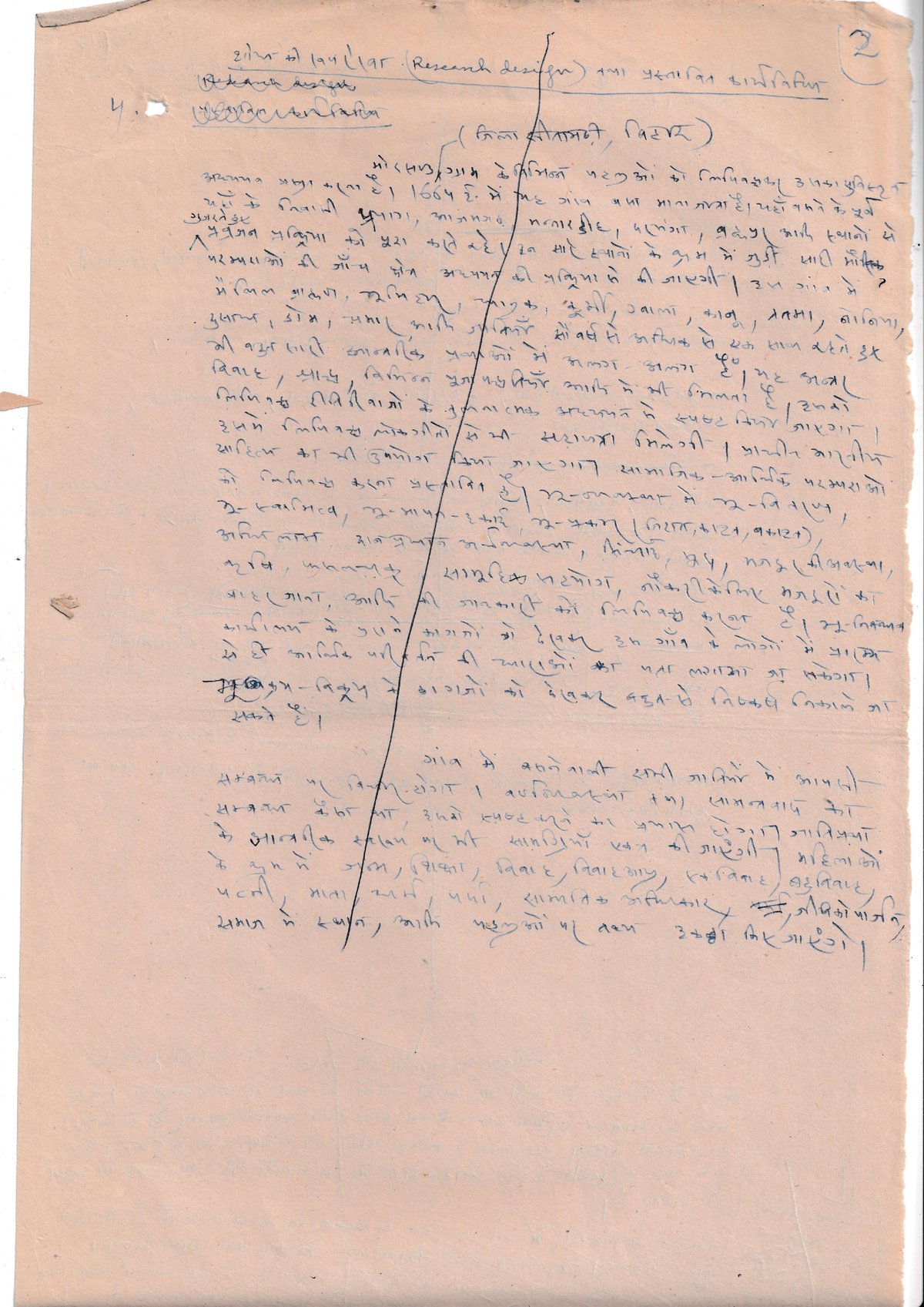
अध्ययन के भिन्नताओं को लिपिबद्ध करने के दो खरीदायों(?) का प्रयास किया जायेगा। प्रथम में गाँव के लोगों से यह जानने का प्रयास किया जाएगा कि वे कहाँ से आकर यहां बसे हैं। मान्यता अनुसार मनोरथडीह दरभंगा, बागार और नवादा से प्रवजन प्रक्रिया को पूरा करते हुए यह गाँव आबाद हुआ। सन् १६४२ में इस गाँव के विश्व समाज में प्रवासन की जांच क्षेत्र अध्ययन की प्रक्रिया से की जाएगी।
An attempt will be made to document the variations of the study through two approaches(?). First, an effort will be made to learn from the village people where they came from before settling here. According to belief, this village was populated through the migration process from Manorathdeeh Darbhanga, Bagar and Nawada. The migration of this village to world society in 1642 will be examined through the field study process.
इस गांव में ब्राह्मण, भूमिहार, बनिया, ग्वाला, डोम, धोबी, समार, सलाम, चमार, अहीर, वाल्मीकि, हलवाई, काना, बारी, शैली(?) इत्यादि से अधिक से एक साथ रहती हैं। भी बहुत सारी आन्तरिक प्रथाओं में अलग पाई जाती है जैसे-विवाह, श्राद्ध, तीज, त्योहार, विभिन्न पूजा पद्धतियों के रीतिरिवाजों में भी मिलता है। सभी जातियों के लिपिबद्ध लोकगीतों का तुलनात्मक अध्ययन से स्पष्ट किया जाएगा। इसमें उपलब्ध लिपिबद्ध ग्रन्थों और सन्दर्भ-पुस्तकों का भी उपयोग किया जाएगा।
In this village, more than Brahman, Bhumihar, Baniya, Gwala, Dom, Dhobi, Samar, Salam, Chamar, Ahir, Valmiki, Halwai, Kana, Bari, Shaili(?) and others live together. They are also found different in many internal practices such as marriage, shraddh, teej, festivals, and various puja rituals and customs. This will be clarified through comparative study of documented folk songs of all castes. Available documented texts and reference books will also be used in this.
सामाजिक-आर्थिक परंपराओं को लिपिबद्ध करना प्रस्तावित है। इसमें भू-वितरण, भू-स्वामित्व भू-माप-हाल, कट्ठा (बीघा, धुर, कट्ठा), दान प्रथा, सिंचाई, फसल, कृषि मजदूरों की अवस्था, सामूहिक सहयोग, नौकरी के लिए मजदूरों का बाहर जाना, आदि की जानकारी को लिपिबद्ध के माध्यम से स्पष्ट किया जाएगा। कार्यालय के पुराने कागजों को देखकर बहुत-से निष्कर्ष निकाले जा सकते हैं।
It is proposed to document socio-economic traditions. In this, information about land distribution, land ownership, land measurement system, katha (bigha, dhur, katha), donation practices, irrigation, crops, condition of agricultural laborers, collective cooperation, workers going out for jobs, etc. will be clarified through documentation. Many conclusions can be drawn by examining old office papers.
गाँव में बसने वाली सभी जातियों में आपसी सम्बन्ध कैसा(?) है। इसको स्पष्ट करने का प्रयास होगा। जाति प्रथा के ज्ञातिक स्वरूप पर भी सामग्रियाँ एकत्रित की जाएंगी। महिलाओं में शिक्षा के प्रभाव जहीदारी(?) में मत, एक विवाह, बहु विवाह, धर्म परिवर्तन, तलाक, पुनर्विवाह, विधवा(?) अधिकार, दहेज प्रथा(?) आदि सामाजिक पहलुओं पर तथ्य एकत्रित किए जाएंगे।
What kind(?) of mutual relations exist among all the castes living in the village. An attempt will be made to clarify this. Materials will also be collected on the kinship aspects of the caste system. Facts will be collected on social aspects such as the impact of education among women, opinions on jahidari(?), monogamy, polygamy, religious conversion, divorce, remarriage, widow(?) rights, dowry system(?) etc.
विकास आर्यव्रत
क्षेत्रीय अध्ययन
(ग्राम सीतामढ़ी, बिहार)
District Sitamarhi (Research design) proposed methodology
Vikas Aryavrat
Regional Study
(Village Sitamarhi, Bihar)
अध्ययन के भिन्नताओं को लिपिबद्ध करने के दो खरीदायों(?) का प्रयास किया जायेगा। प्रथम में गाँव के लोगों से यह जानने का प्रयास किया जाएगा कि वे कहाँ से आकर यहां बसे हैं। मान्यता अनुसार मनोरथडीह दरभंगा, बागार और नवादा से प्रवजन प्रक्रिया को पूरा करते हुए यह गाँव आबाद हुआ। सन् १६४२ में इस गाँव के विश्व समाज में प्रवासन की जांच क्षेत्र अध्ययन की प्रक्रिया से की जाएगी।
An attempt will be made to document the variations of the study through two approaches(?). First, an effort will be made to learn from the village people where they came from before settling here. According to belief, this village was populated through the migration process from Manorathdeeh Darbhanga, Bagar and Nawada. The migration of this village to world society in 1642 will be examined through the field study process.
इस गांव में ब्राह्मण, भूमिहार, बनिया, ग्वाला, डोम, धोबी, समार, सलाम, चमार, अहीर, वाल्मीकि, हलवाई, काना, बारी, शैली(?) इत्यादि से अधिक से एक साथ रहती हैं। भी बहुत सारी आन्तरिक प्रथाओं में अलग पाई जाती है जैसे-विवाह, श्राद्ध, तीज, त्योहार, विभिन्न पूजा पद्धतियों के रीतिरिवाजों में भी मिलता है। सभी जातियों के लिपिबद्ध लोकगीतों का तुलनात्मक अध्ययन से स्पष्ट किया जाएगा। इसमें उपलब्ध लिपिबद्ध ग्रन्थों और सन्दर्भ-पुस्तकों का भी उपयोग किया जाएगा।
In this village, more than Brahman, Bhumihar, Baniya, Gwala, Dom, Dhobi, Samar, Salam, Chamar, Ahir, Valmiki, Halwai, Kana, Bari, Shaili(?) and others live together. They are also found different in many internal practices such as marriage, shraddh, teej, festivals, and various puja rituals and customs. This will be clarified through comparative study of documented folk songs of all castes. Available documented texts and reference books will also be used in this.
सामाजिक-आर्थिक परंपराओं को लिपिबद्ध करना प्रस्तावित है। इसमें भू-वितरण, भू-स्वामित्व भू-माप-हाल, कट्ठा (बीघा, धुर, कट्ठा), दान प्रथा, सिंचाई, फसल, कृषि मजदूरों की अवस्था, सामूहिक सहयोग, नौकरी के लिए मजदूरों का बाहर जाना, आदि की जानकारी को लिपिबद्ध के माध्यम से स्पष्ट किया जाएगा। कार्यालय के पुराने कागजों को देखकर बहुत-से निष्कर्ष निकाले जा सकते हैं।
It is proposed to document socio-economic traditions. In this, information about land distribution, land ownership, land measurement system, katha (bigha, dhur, katha), donation practices, irrigation, crops, condition of agricultural laborers, collective cooperation, workers going out for jobs, etc. will be clarified through documentation. Many conclusions can be drawn by examining old office papers.
गाँव में बसने वाली सभी जातियों में आपसी सम्बन्ध कैसा(?) है। इसको स्पष्ट करने का प्रयास होगा। जाति प्रथा के ज्ञातिक स्वरूप पर भी सामग्रियाँ एकत्रित की जाएंगी। महिलाओं में शिक्षा के प्रभाव जहीदारी(?) में मत, एक विवाह, बहु विवाह, धर्म परिवर्तन, तलाक, पुनर्विवाह, विधवा(?) अधिकार, दहेज प्रथा(?) आदि सामाजिक पहलुओं पर तथ्य एकत्रित किए जाएंगे।
What kind(?) of mutual relations exist among all the castes living in the village. An attempt will be made to clarify this. Materials will also be collected on the kinship aspects of the caste system. Facts will be collected on social aspects such as the impact of education among women, opinions on jahidari(?), monogamy, polygamy, religious conversion, divorce, remarriage, widow(?) rights, dowry system(?) etc.
Words: 381Low confidence: 72Avg confidence: 74.6%