Morsand — Village History & Traditions
This project digitizes and transcribes the manuscripts of Prof. Harishchandra Satyarthi documenting the history, traditions, and families of Morsand village. The research was conducted from the early 1960s through the late 1970s, drawing on field work, oral traditions of village elders, land registration records, and the Darbhanga Raj archives. The resulting 149-page manuscript — a mix of typewritten English and handwritten Hindi/Devanagari — covers village life from the 17th century to 1947 and beyond.
In February 2026 the manuscript was scanned at high resolution and processed through a hybrid pipeline: Google Cloud Vision OCR extracts the raw text, then Claude AI cross-references the OCR output against the original ink strokes to correct errors, mark handwritten sections, and provide English translations of Hindi passages. The results are presented here for human editorial review.
About the Author
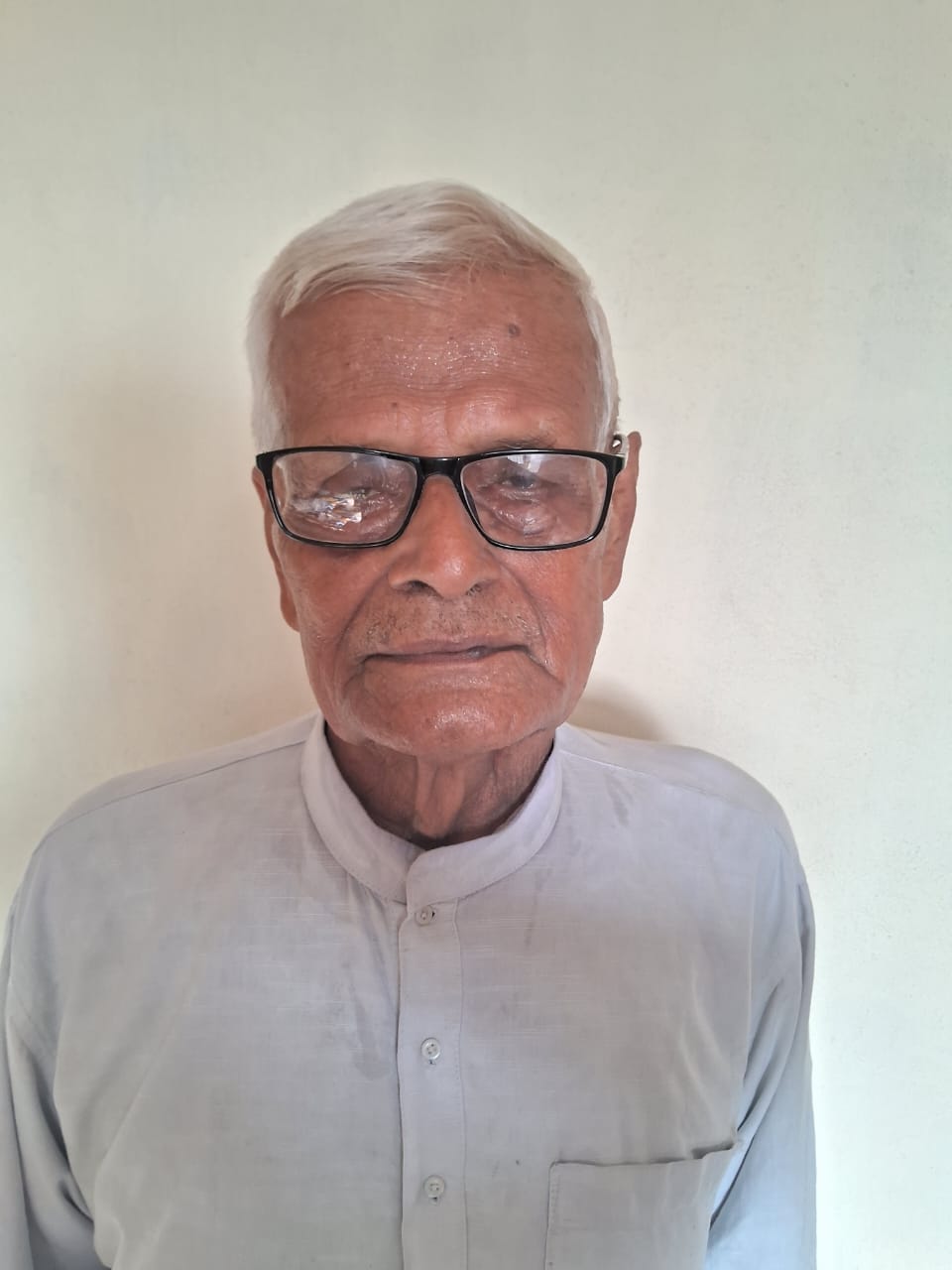
Prof. Harishchandra Satyarthi (Dr. H.C. Satyarthi) is an Indian academic and historian affiliated with B.R. Ambedkar Bihar University (BRABU) in Muzaffarpur, Bihar, where he held senior faculty positions in the Department of History.
His scholarly work focuses on the social and cultural history of ancient and medieval India, with particular expertise in the post-Maurya period (c. 185 BC – 319 AD). His published research in the Proceedings of the Indian History Congress includes studies on the social position, economic conditions, and institutional challenges of Brahmanical society during this era, as well as epigraphic analysis such as the significance of the Kalawan copper-plate inscription (year 134 = AD 77).
Beyond ancient history, Prof. Satyarthi has contributed to edited volumes and academic journals on topics spanning the institution of marriage, contemporary social challenges, human rights, family law, and medical jurisprudence. He has also been involved in seminar committees at the Faculty of Law, BHU, and in discussions on human rights and legal education.
Prof. Satyarthi resides in Muzaffarpur with his son. His wife, Prof. Maya Kumari Satyarthi, also a retired professor at BRABU, passed away recently.
About Morsand
Morsand, Sitamarhi District, Bihar — on the banks of the Lakhandei
Morsand is a village in Sitamarhi district, Bihar, situated on the banks of the river Lakhandei in the historic Mithila region. The people of Morsand hold deep ties to Maithili culture — Goddess Sita is revered as a sister and Lord Rama as brother-in-law, reflecting the village's roots in the ancient kingdom of Videha.
Prof. Satyarthi's manuscript, titled “Morsand Village — A Broken Chain of History: A Micro-Study (From the 19th Century to 1947 AD)”, is organized into chapters covering social life (caste divisions, feudalism, samskaras, position of women), economic life (agriculture, land ownership, the zamindari system, irrigation and usury), religious and cultural practices, and the migration histories of families tracing their origins through Prayaga, Mannara Diha (Ballia), Darbhanga, and Brahmapur. The manuscript also includes a collection of Bajjika folk songs of Morsand with English translations.
The village is known for its emphasis on education — nearly every family has a member in the teaching profession. Major festivals include Chhath Puja, Holi, Diwali, Dussehra, and Makar Sankranti, celebrated with a spirit of cooperation and brotherhood.
About the Project
The collection consists of 149 pages of mixed typewritten and handwritten text in English and Hindi. Each page has been scanned at high resolution and processed through a hybrid pipeline combining Google Cloud Vision OCR with Claude AI for intelligent text correction and formatting.
Handwritten sections are marked with [HW] tags and uncertain readings are indicated with (?) markers for editorial review.